


TestGrid Private Dedicated Cloud
More control, less infrastructure overhead
Move beyond the tradeoff between shared-cloud convenience and running your own device lab. TestGrid gives your teams dedicated hosting for mobile and web testing without the work of running the environment yourself.

What’s Reserved in Your Private Device Cloud?
Private means more than restricted access. With TestGrid, isolation extends to the resources your tests run on and the data they produce.
Request Free TrialSingle-tenant architecture
TestGrid assigns physical mobile devices, browsers, and execution capacity exclusively to your organization. Your runs don’t compete with other customers for the same pool.
Private storage
Need a clear data isolation to point to during reviews and audits? With TestGrid, your test artifacts, logs, screenshots, and execution data stay in storage dedicated to your environment.
Build Your Device Pool Around What You Need to Test
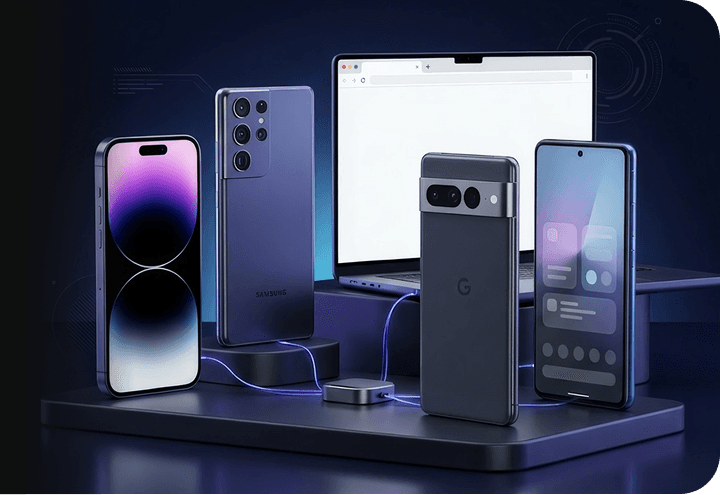
TestGrid lets you shape your dedicated device cloud like a private mobile device lab. Build your device farm around real iPhones, Samsung Galaxy, Google Pixel, and other Android devices, alongside Chrome, Firefox, Safari, and Edge coverage for web and private device testing.
Lock In Critical Test Windows With TestGrid
Use the platform’s device reservation controls to pin specific devices to your team or pipeline for scheduled runs and regression testing. Keep the hardware configuration consistent when you need to reproduce failures or validate a release against the same setup.
Request Free Trial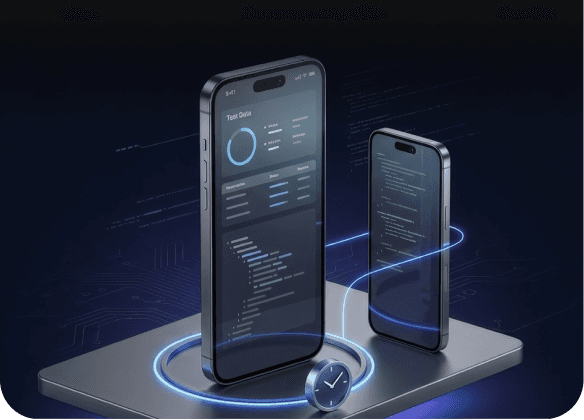
Easily Test Under Your Users’ Conditions
Want to see how your application behaves under the scenarios your users actually encounter? Exercise GPS, biometric authentication, gestures, camera input, orientation changes, and network throttling on real devices with TestGrid. Catch device-specific issues before they reach production.
Request Free Trial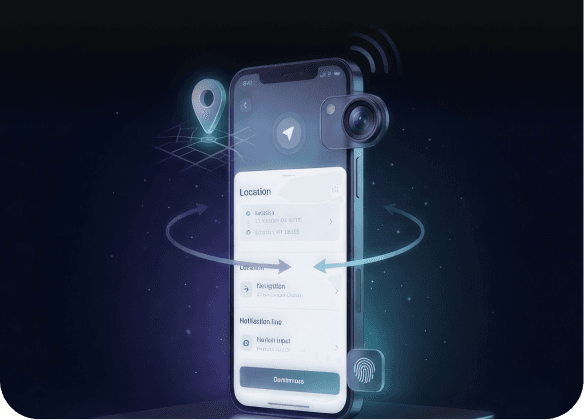
Decide Who Gets In and What They Can Do
Control who can access your private testing environment, what they can use, and how activity is tracked with TestGrid. Leverage Role-Based Access Control (RBAC), Single Sign-On (SSO), Multi-Factor Authentication (MFA), site-to-site VPN connectivity, and audit logs.

Run Private Device Cloud Testing With Your Existing Tech Stack
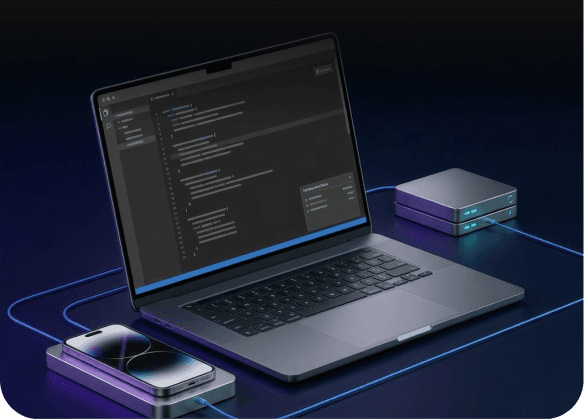
TestGrid equips you to run your existing Appium, Selenium, Playwright, and Cypress test suites as written with no rewrite or conversion into a proprietary format. Trigger automated runs from Jenkins, GitHub Actions, and GitLab CI/CD, and send test status back into your continuous integration workflows.
Controls and Certifications Expected of an Enterprise Device Cloud
TestGrid is SOC 2 Type II audited and ISO/IEC 27001:2022 certified. Data is encrypted at rest and in transit, access follows least-privilege principles, and systems are continuously monitored. The platform also supports testing workflows in HIPAA-regulated environments.

Frequently Asked Questions (FAQs)
What is a private device cloud?

A private device cloud is a testing environment in which device infrastructure, execution capacity, and related resources are isolated for a single customer rather than shared across multiple tenants. A dedicated private device cloud typically provides greater control over access, capacity, configurations, and test data.
What is a private device cloud?
A private device cloud is a testing environment in which device infrastructure, execution capacity, and related resources are isolated for a single customer rather than shared across multiple tenants. A dedicated private device cloud typically provides greater control over access, capacity, configurations, and test data.
What’s the difference between a public and private device cloud?
A public device cloud uses shared infrastructure that serves multiple customers, while a private device cloud allocates resources to a single customer. The private model provides stronger isolation, more controlled access, and greater consistency over how devices, execution capacity, and test data are managed.
TestGrid combines the convenience of a private mobile device cloud with dedicated infrastructure, managed hosting, and controlled access for enterprise testing workflows.
Can TestGrid Private Dedicated Cloud be configured for specific Android and iOS devices?
Yes. TestGrid can configure a private device cloud for mobile testing around the Android and iOS devices, OS versions, and browsers required by your test coverage. Device configuration can also be used to align supported settings and conditions with application requirements.
How does TestGrid support mobile test automation and parallel test execution in Private Dedicated Cloud?
TestGrid supports mobile test automation with frameworks including Appium, Selenium, Playwright, and Cypress. Teams can run parallel test execution across dedicated devices and browsers, enabling dedicated device testing for regression, release validation, and other automated workflows without converting existing suites.
How does TestGrid manage remote device access in a secure device cloud?
TestGrid provides remote device access through controlled enterprise authentication and network policies. In a secure device cloud, teams can use RBAC, SSO, MFA, VPN connectivity, and audit logs to govern who can access devices, browsers, and other testing resources.
What does data residency mean in a private device cloud?
Data residency refers to the geographic location where test data, artifacts, logs, and other stored information are physically hosted or processed. It’s distinct from access control or data isolation and is typically determined by the architecture and hosting arrangement of the environment.