


Healthcare Software Testing That Holds Up Under Pressure
Your healthcare application won’t always run under perfect conditions. With TestGrid, you can test what happens when devices, networks, interfaces, or authentication flows change, and make those scenarios part of your existing healthcare software testing automation.

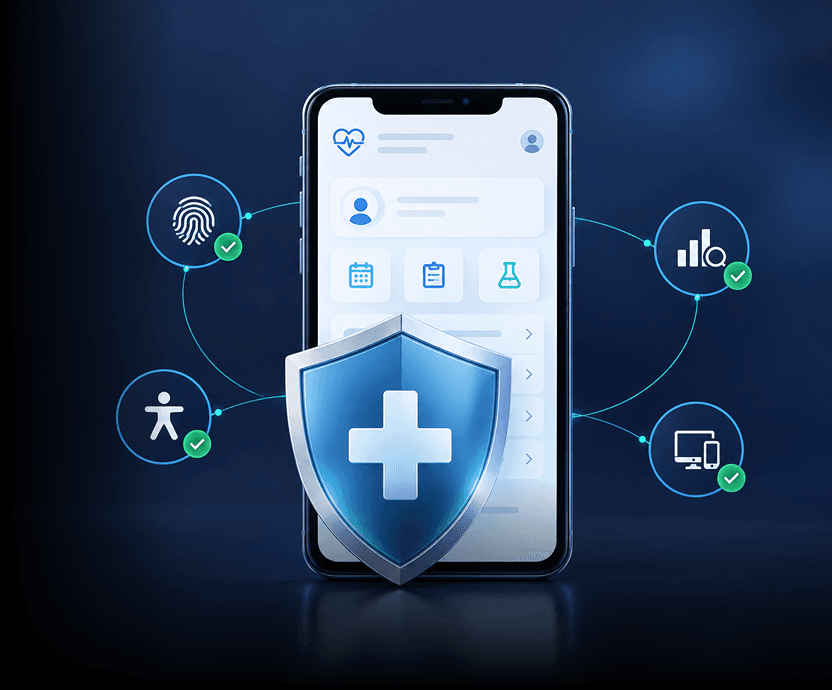
Take Medical Software Testing Beyond Screen-Level Checks
With TestGrid, automated software testing in healthcare covers the real-device behavior your app needs to handle, not just what appears on screen.
Request Free TrialPut biometric login to the test
Simulate successful and unsuccessful biometric checks on supported real devices, so you can verify your app’s authentication response without requiring physical fingerprint or face input.
Feed real test images into camera flows
With TestGrid, you can inject images directly into camera-dependent workflows to test document capture, card uploads, QR or barcode scanning, and similar journeys on remote real devices.
Follow push notifications into the app
Test notifications on real iOS and Android devices, then use Appium to see what happens after users tap them, from appointment reminders and follow-ups to alerts and status updates.
Keep TOTP-Protected Flows Fully Automated
Why stop an automated test every time login asks for a verification code? Configure the TOTP secret once with TestGrid Authenticator and generate codes during execution, so automated healthcare software testing continues from sign-in through protected application screens without manual intervention.

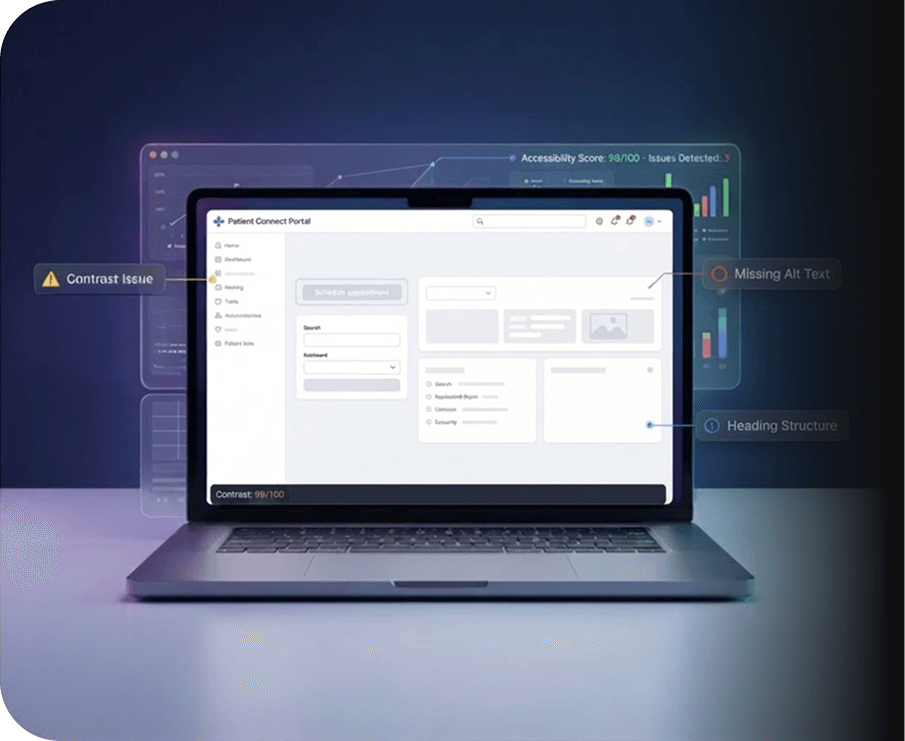
Catch Accessibility Issues While You’re Already Testing
Accessibility shouldn’t be a separate QA cycle. TestGrid equips you to review WCAG-related findings, severity, affected criteria, screenshots, and suggested fixes while the surrounding functionality is still under test, keeping accessibility inside everyday healthcare software testing.
Request Free TrialStress-Test Your App Across Network Changes
Your users won’t always have stable Wi-Fi. When testing healthcare software, use TestGrid to switch between GPRS, 2G, 3G, 4G, 5G, and Wi-Fi profiles and verify your application’s behavior as connectivity changes during a session.
Request Free Trial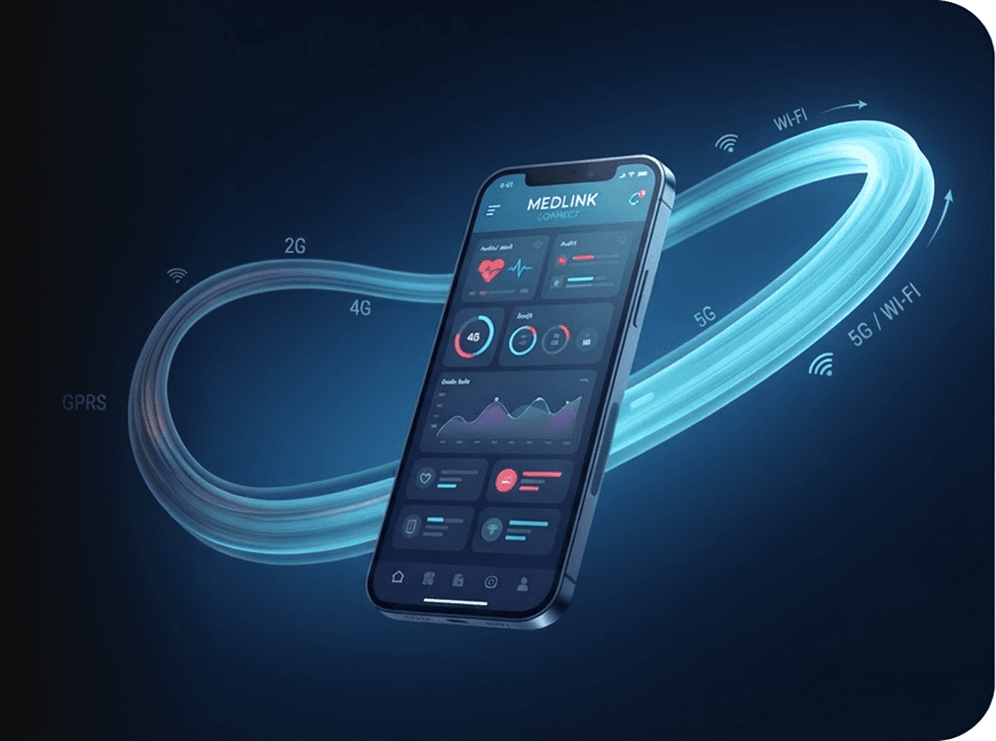

Test the Audio Path, Not Just the Screen Around It
Does your application depend on voice or audio? Play pre-recorded input, stream microphone audio, capture playback, and compare recorded output with reference samples in TestGrid. Then investigate distortion, background interference, waveform changes, decoding issues, and audio behavior across devices and conditions.
Request Free TrialKeep Healthcare Test Automation Running Through UI Changes
Why repair tests every time a field, button, or layout changes? TestGrid’s self-healing identifies changed interface elements and adapts locator logic during execution, so you spend less time fixing regression tests as your healthcare application evolves.
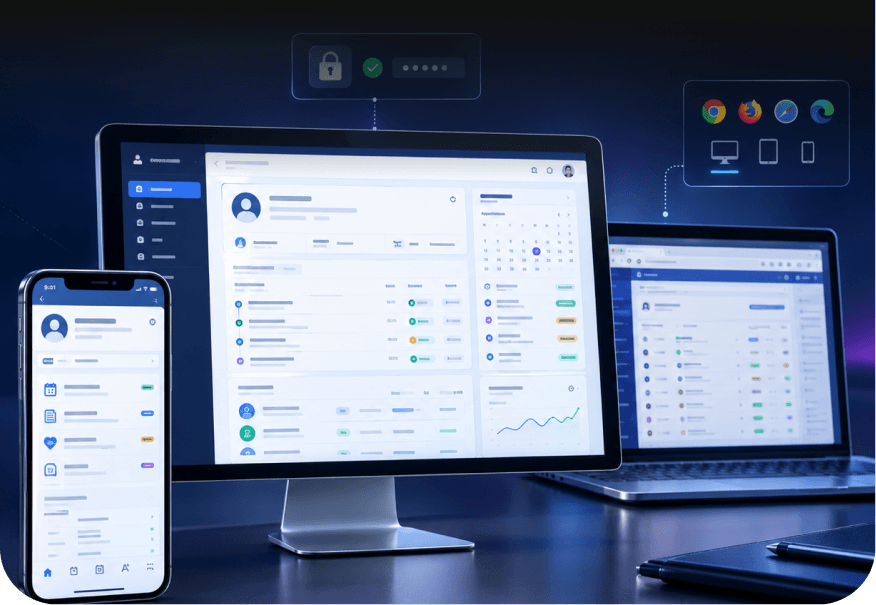
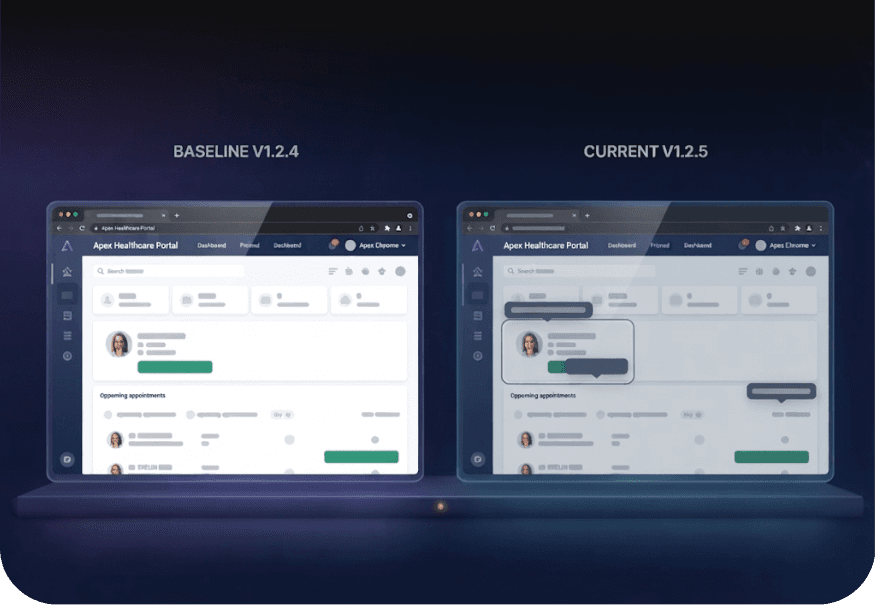
Spot UI Regressions Functional Tests Can Miss
Compare screens against approved baselines in TestGrid to uncover missing elements, overlaps, clipped content, layout shifts, styling changes, and browser- or device-specific rendering issues before those visual regressions reach production.
Why Healthcare QA Teams Choose TestGrid?
As your automated healthcare QA scales, TestGrid fits into the way your team already tests
Keep testing where your infrastructure requires it
Choose dedicated hosting, private cloud, on-premises, or hybrid deployment based on your environment. TestGrid can connect to staging applications and systems behind firewalls through secure tunnels or VPNs, so you stay in control of where and how your testing runs.
Stick with the frameworks you already use
Run automated testing for healthcare software with Selenium, Appium, Cypress, Playwright, Espresso, XCUITest, WebdriverIO, or Detox. TestGrid lets you run existing suites, trigger CI/CD execution, and combine REST or SOAP API checks with UI workflows.
Debug with the evidence already attached
When a test fails, you can work with screenshots, recordings, crash reports, network logs, browser DevTools, ADB, Appium Inspector, and step-level execution evidence to investigate what happened before spending time recreating the entire workflow.
Frequently Asked Questions (FAQs)
What is healthcare software testing?

Healthcare software testing checks whether healthcare applications work reliably across workflows, users, devices, integrations, and operating conditions. It covers functional behavior, accessibility, authentication, usability, and other quality areas that affect real healthcare use.
What is healthcare software testing?
Healthcare software testing checks whether healthcare applications work reliably across workflows, users, devices, integrations, and operating conditions. It covers functional behavior, accessibility, authentication, usability, and other quality areas that affect real healthcare use.
How is medical software testing different from general software testing?
Medical software testing places greater emphasis on workflow accuracy, permissions, data handling, traceability, and failure impact because defects can affect sensitive healthcare processes. It does not automatically mean regulatory certification or clinical validation.
How is medical software testing different from general software testing?
Medical software testing places greater emphasis on workflow accuracy, permissions, data handling, traceability, and failure impact because defects can affect sensitive healthcare processes. It does not automatically mean regulatory certification or clinical validation.
Which healthcare workflows should you automate first?
Start healthcare test automation with repeatable, high-value flows such as login, registration, scheduling, recurring regression paths, and role-based journeys. Automated software testing in healthcare works best where outcomes are clear and frequently rechecked.
Which healthcare workflows should you automate first?
Start healthcare test automation with repeatable, high-value flows such as login, registration, scheduling, recurring regression paths, and role-based journeys. Automated software testing in healthcare works best where outcomes are clear and frequently rechecked.
Where should manual testing still fit into automated healthcare QA?
Use automated healthcare QA for repeatable checks, then reserve manual testing for exploratory scenarios, usability review, unexpected edge cases, and situations requiring human judgment. Automated testing for healthcare software works best alongside, not instead of, targeted manual testing.
Where should manual testing still fit into automated healthcare QA?
Use automated healthcare QA for repeatable checks, then reserve manual testing for exploratory scenarios, usability review, unexpected edge cases, and situations requiring human judgment. Automated testing for healthcare software works best alongside, not instead of, targeted manual testing.
How do you build a reliable strategy for testing healthcare software?
Map critical journeys, rank them by risk, cover positive and negative paths, define expected outcomes, and maintain regression coverage over time. A strong healthcare software testing tool should support this strategy without forcing you to rebuild existing workflows.
How do you build a reliable strategy for testing healthcare software?
Map critical journeys, rank them by risk, cover positive and negative paths, define expected outcomes, and maintain regression coverage over time. A strong healthcare software testing tool should support this strategy without forcing you to rebuild existing workflows.