


iPhone Simulator Online for iOS App Testing
Apple devices are powerful. But they’re all different. Screen sizes, iOS versions, and hardware differences can affect how your iOS app works. With TestGrid, you can perform testing across simulated configurations and real iPhones and identify compatibility issues before release.
Request Free Trial
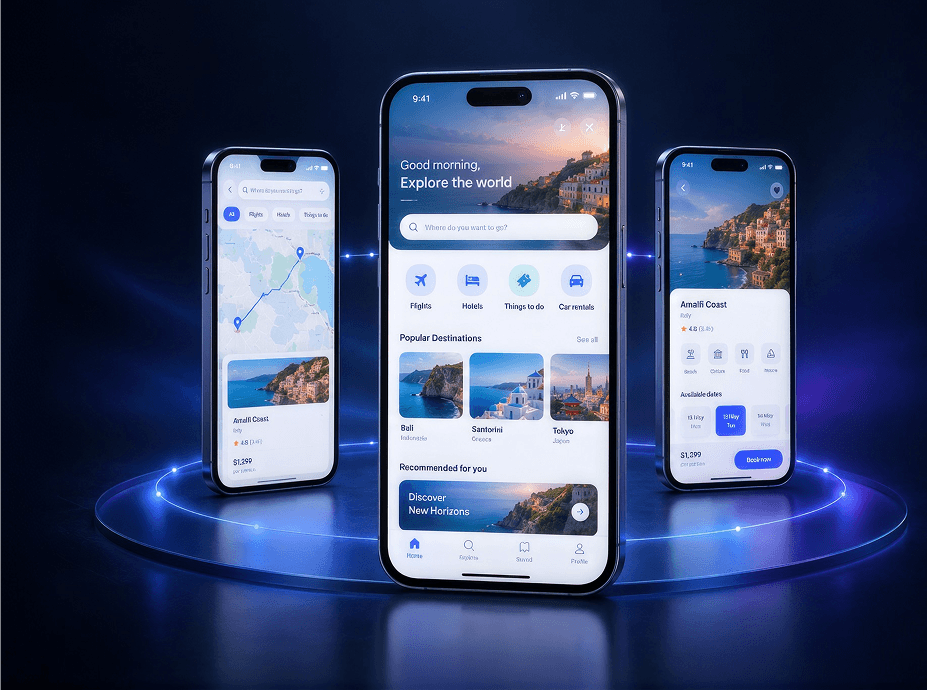
See TestGrid’s iOS Simulator in Action
Manual, Automated, or No-Code? You Decide
TestGrid supports different approaches to iOS testing based on the environment and validation you require.
For manual checks, interact directly with your app on an iPhone simulator to assess navigation, usability, and visual consistency.
For automation, execute Appium and XCTest/XCUITest checks across supported screen configurations and iOS versions.
For codeless workflows, create automated iOS tests in supported TestGrid environments.
Simplify iOS App Testing with iPhone Simulator Online Access
Your app needs to perform at its best. Our platform gives you simulated iPhone environments for functional checks and automation.
Request Free TrialCheck your app across models and versions
Use TestGrid’s iPhone simulator online to test your app on iPhone 16, 15, 14, and 13 configurations with iOS 18 and iOS 17. Compare navigation, rendering, and compatibility by device and OS combinations before testing on real iPhones.
Simulate location-dependent app behavior
Configure geolocation in an iOS online simulator to check maps, regional content, and GPS-driven workflows with scenario-specific coordinates on TestGrid. Also, verify language, localization, and time-zone behavior.
Automate iOS Simulator Checks with Appium and XCTest
Connect your Appium suite to a TestGrid iOS simulator using generated capabilities, or upload XCTest/XCUITest packages for native iOS automation. Add these checks to your CI/CD pipeline to detect regressions on supported iOS versions before assigning hardware-dependent scenarios to real iPhones.
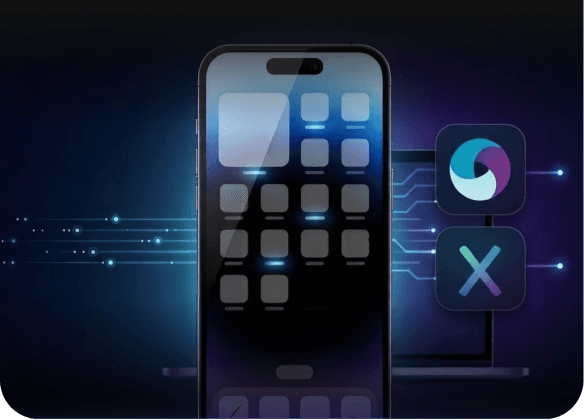
Diagnose iOS Simulator and Real-Device Failures
Review session recordings, screenshots, logs, and error details after a failed test. Match the visual state to logged errors to isolate the affected step, then send defect details from TestGrid to Jira or Slack for triage.
Request Free Trial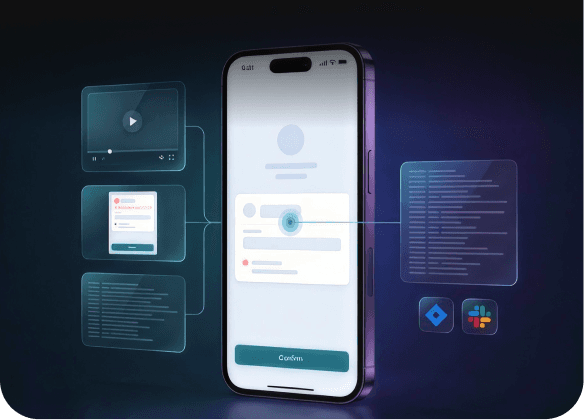

When Should You Use an iPhone Simulator?
A simulated environment makes sense when you need frequent feedback during development and the scenario doesn’t depend on physical hardware
Early functional checks
Turn to an iPhone simulator for quick checks of navigation, forms, validation rules, error states, authentication flows, and application logic during build.
UI and layout validation
Test your interface across simulated screen configurations, including text wrapping, clipping, alignment, orientation changes, and responsive behavior.
Smoke and regression checks
Run repeatable smoke and regression checks with an online iOS simulator to catch functional issues across supported configurations before real-device testing.
iPhone Simulator vs Real iPhone
Choose the environment according to the behavior you need to verify
| Features | Real iPhones (Top Choice) | iOS Simulators |
|---|---|---|
| Best for | Release-critical checks on physical hardware | Early functional, UI, smoke, and regression checks |
| Hardware behavior | Reflects physical iPhone hardware | Software-simulated environment |
| Face ID, Touch ID, camera, sensors | Physical-device support | Simulated, limited, or unavailable by feature |
| CPU, memory, battery | Device-level measurements | Doesn’t represent physical hardware accurately |
| GPS and location | Device-level location behavior | Configured location simulation |
| Touch and gestures | Physical-device interaction | Software-simulated interaction |
| Appium automation | Supported | Supported |
| XCTest/XCUITest | Supported | Supported on applicable simulator targets |
| Device and iOS coverage | Supported real iPhone models and iOS versions | Supported simulated configurations and iOS versions |
Test Hardware-Dependent Scenarios on Real iPhones
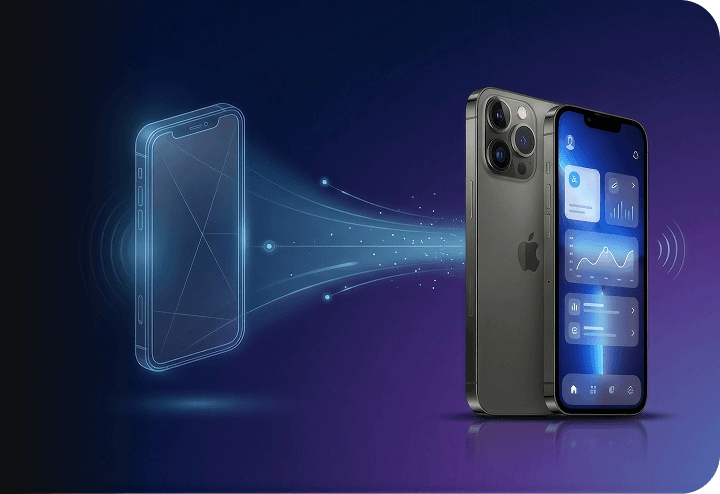
TestGrid lets you move from an iOS simulator to real iPhones when testing depends on hardware, performance, or release-critical behavior, then run those scenarios through TestGrid’s Real Device Cloud directly.
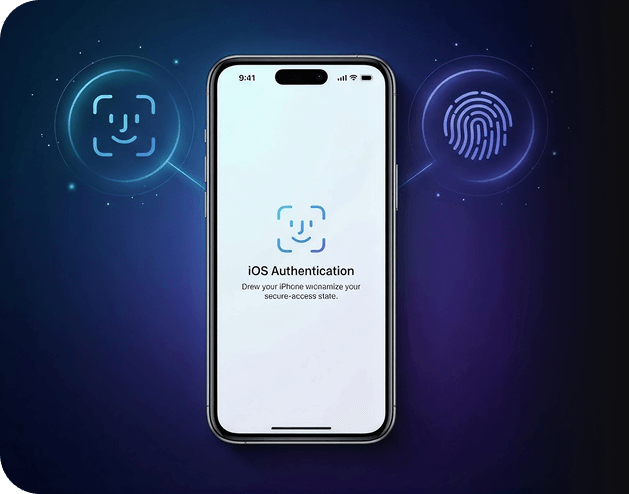
Check Face ID and Touch ID on Real iPhones
An online iPhone simulator can’t reproduce physical biometric hardware. Test Face ID and Touch ID authentication on TestGrid’s real iPhones, check how your app responds to biometric prompts, and confirm fallback flows such as failed authentication.
Why Choose TestGrid for iPhone Simulator Online Testing?
See how we support enterprise QA workflows:
Reserve real iPhones for critical test cycles
Assign specific iPhones to planned test windows and avoid device conflicts between teams. TestGrid’s device reservation and allocation features help coordinate access for regression suites and release checks requiring dedicated hardware.
Test in MDM-managed and VPN-enabled environments
Verify iOS applications in managed enterprise environments using TestGrid’s MDM support and VPN-enabled setups. Reproduce workflows that depend on corporate security policies, restricted networks, or regulated testing environments.
Control remote iPhones with turbo mode
Navigate remote iPhones through TestGrid’s Screen Broadcasting Turbo Mode. Tap-based scrolling and responsive device controls support remote debugging and functional checks when your testing team and physical devices are in different locations.
What Customers Say About TestGrid

“TestGrid Scriptless Automation helped automate all test cases in very less time. I'm amazed to see such features at affordable prices.”
Kartik Natarajan
Executive VP and CTO Compunnel Inc.

“TestGrid has been a game changer for us in the testing process. Especially the Sprint Automation feature for GUI and API has greatly improved the end to end flow of testing.”
Sateesh Surampally
QA Lead

“TestGrid Scriptless Automation changed the way we work. It improved our efficiency and saved alot of time. The support and onboarding given all along the way is amazing.”
Pravin Lakkaraju
CEO and Co founder Bullworks
“TestGrid Scriptless Automation helped automate all test cases in very less time. I'm amazed to see such features at affordable prices.”
Kartik Natarajan
Executive VP and CTO Compunnel Inc.
“TestGrid has been a game changer for us in the testing process. Especially the Sprint Automation feature for GUI and API has greatly improved the end to end flow of testing.”
Sateesh Surampally
QA Lead
“TestGrid Scriptless Automation changed the way we work. It improved our efficiency and saved alot of time. The support and onboarding given all along the way is amazing.”
Pravin Lakkaraju
CEO and Co founder Bullworks
Frequently Asked Questions (FAQs)
What is an iPhone simulator?

An iPhone simulator is a software environment that reproduces key iPhone and iOS behaviors for application development, debugging, and functional validation without requiring physical iPhone hardware.
What is an iPhone simulator?
An iPhone simulator is a software environment that reproduces key iPhone and iOS behaviors for application development, debugging, and functional validation without requiring physical iPhone hardware.
Can I test iOS apps on simulators located in different regions?
Yes. TestGrid's iOS simulator online supports geolocation simulation, which lets you validate location-dependent functionality, language settings, localization, maps, and other region-specific behavior.
Can I test iOS apps on simulators located in different regions?
Yes. TestGrid's iOS simulator online supports geolocation simulation, which lets you validate location-dependent functionality, language settings, localization, maps, and other region-specific behavior.
Can I execute Appium and XCUITest tests on an iPhone simulator in TestGrid?
Yes. TestGrid supports local Appium automation against iOS simulators using generated capabilities. Native iOS automation can also execute XCTest/XCUITest suites on supported simulator targets.
Can I execute Appium and XCUITest tests on an iPhone simulator in TestGrid?
Yes. TestGrid supports local Appium automation against iOS simulators using generated capabilities. Native iOS automation can also execute XCTest/XCUITest suites on supported simulator targets.
Is an iOS emulator online or an iOS online emulator the same as Apple's Simulator?
Apple uses the term Simulator for its virtual iOS environment. Searches for an online iPhone emulator or iPhone online emulator commonly refer to remote access to a simulated iPhone environment. TestGrid refers to its virtual iOS targets as simulators.
Is an iOS emulator online or an iOS online emulator the same as Apple's Simulator?
Apple uses the term Simulator for its virtual iOS environment. Searches for an online iPhone emulator or iPhone online emulator commonly refer to remote access to a simulated iPhone environment. TestGrid refers to its virtual iOS targets as simulators.
How does TestGrid help assess iOS app performance?
Use simulator execution for functional feedback during development. For device-level performance analysis, TestGrid's Real Device Cloud provides CPU, memory, battery, network, and UI responsiveness metrics from physical iPhones.
How does TestGrid help assess iOS app performance?
Use simulator execution for functional feedback during development. For device-level performance analysis, TestGrid's Real Device Cloud provides CPU, memory, battery, network, and UI responsiveness metrics from physical iPhones.
When should I choose a real iPhone over an iPhone simulator?
Choose a real iPhone when you need to verify hardware-dependent behavior, biometrics, camera input, gestures, battery impact, device performance, or other release-critical scenarios that require physical hardware.
When should I choose a real iPhone over an iPhone simulator?
Choose a real iPhone when you need to verify hardware-dependent behavior, biometrics, camera input, gestures, battery impact, device performance, or other release-critical scenarios that require physical hardware.
Why is testing across multiple iOS versions important?
Different iOS versions can introduce changes to APIs, permissions, interface behavior, and application compatibility. Validating the versions used by your target audience helps you detect regressions before release.
Why is testing across multiple iOS versions important?
Different iOS versions can introduce changes to APIs, permissions, interface behavior, and application compatibility. Validating the versions used by your target audience helps you detect regressions before release.