


Mobile Testing Cloud for Real Android and iOS Devices
Get secure access to real Android and iOS devices across cloud, on-premise, and hybrid environments with TestGrid. Run manual or automated tests, simulate real-world conditions, and integrate directly into your CI/CD pipeline. Reduce operational costs while expanding your cloud mobile testing practice.
Request Free Trial

Streamline Your Testing Operations With TestGrid
Apt for teams where testing velocity is as important as development efforts.
Request Free TrialBuild and release management
Upload new builds, retire outdated versions, and manage multiple app releases from a single interface with a centralized mobile test cloud. No repeated setup across devices or teams.
Parallel test execution
Run multiple test cases across multiple devices simultaneously with mobile app testing on cloud. Cut regression cycle times and keep releases moving without QA becoming the bottleneck.
Debugging and diagnostics
TestGrid’s cloud based mobile testing tools give your team access to logs, session recordings, crash reports, and live debugging – all tied to the specific device, OS, and build.
Test Real-World User Conditions, Not Perfect Lab Environments
A perfect lab environment isn’t the same as a real network on a crowded street. TestGrid’s mobile device cloud testing platform equips you to test apps in 3G, 4G, 5G, weak Wi-Fi, and unstable connections, exposing slow-loading screens, broken flows, and failed actions before any user encounters them.
Request Free Trial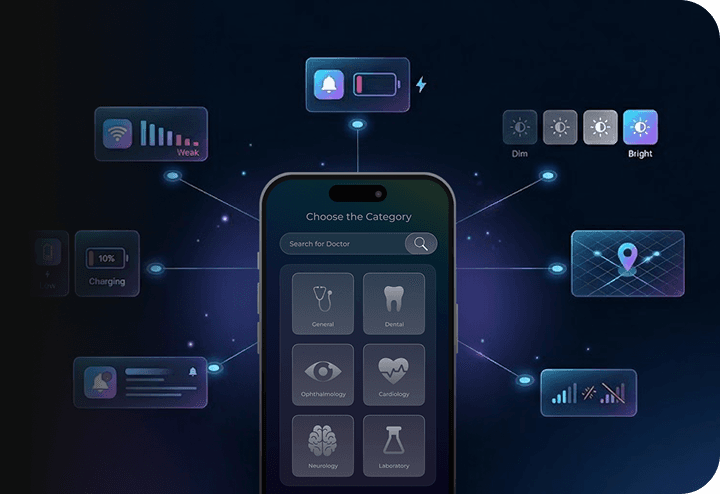

Test Security-Critical Mobile Flows Before Users Do
Authentication failures erode trust quickly and quietly. Android cloud testing and iOS real device validation with TestGrid enable you to verify fingerprint login, secure payment flows, and identity checks under conditions that reflect how users actually authenticate, not how you hope they will.
Request Free TrialValidate Global User Journeys Across Every Region
Pricing, delivery zones, content availability, and permissions don’t behave the same across every market. Simulate users across cities and countries to verify that location-dependent workflows perform correctly regardless of where your customers are with TestGrid’s cloud-based mobile testing platform.
Request Free Trial
Run Existing Automation on a True Mobile Testing Cloud
Switching tools to adopt a new testing environment shouldn't be the price of scaling. With cloud mobile app testing on TestGrid, you can run Appium, Espresso, XCUITest, and Detox scripts directly on real devices. No downloads, no setup delays, and no environment conflicts.
Request Free Trial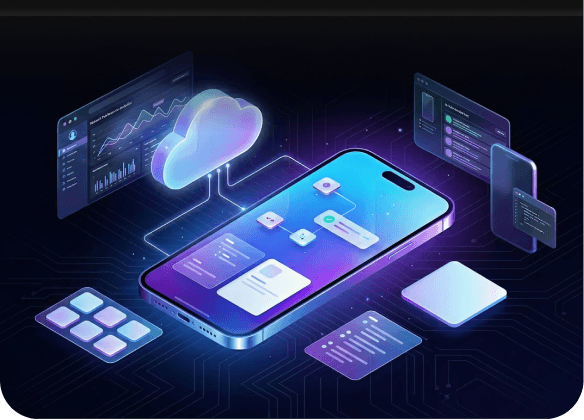
Make Mobile Quality Part of Continuous Delivery
Testing that only happens at the end of a sprint is testing that happens too late. TestGrid enables you to connect cloud based mobile app testing to Jenkins, GitHub Actions, GitLab, Azure DevOps, Jira, and other CI/CD tools so tests trigger automatically with every build.
Request Free Trial
Frequently Asked Questions (FAQs)
What is a mobile testing cloud?

A mobile testing cloud refers to a platform that gives teams remote access to real Android and iOS devices hosted in secure data centers. It allows developers and QA teams to test mobile apps without maintaining a physical device lab, making testing faster, cheaper, and easier to scale.
What is a mobile testing cloud?
A mobile testing cloud refers to a platform that gives teams remote access to real Android and iOS devices hosted in secure data centers. It allows developers and QA teams to test mobile apps without maintaining a physical device lab, making testing faster, cheaper, and easier to scale.
How is TestGrid’s mobile testing cloud different from other platforms?
TestGrid’s mobile testing cloud is different because it supports cloud, on-premise, and hybrid deployments instead of limiting teams to public cloud only. It also offers centralized build management and debugging linked to the exact device, OS version, and app build where issues occur.
How is TestGrid’s mobile testing cloud different from other platforms?
TestGrid’s mobile testing cloud is different because it supports cloud, on-premise, and hybrid deployments instead of limiting teams to public cloud only. It also offers centralized build management and debugging linked to the exact device, OS version, and app build where issues occur.
Can I test on real Android and iOS devices instead of emulators?
Yes, mobile testing cloud platforms allow teams to test on real Android and iOS devices instead of relying only on emulators. This helps identify real-world issues like device-specific bugs, touch responsiveness, camera behavior, biometrics, and network-related failures more accurately.
Can I test on real Android and iOS devices instead of emulators?
Yes, mobile testing cloud platforms allow teams to test on real Android and iOS devices instead of relying only on emulators. This helps identify real-world issues like device-specific bugs, touch responsiveness, camera behavior, biometrics, and network-related failures more accurately.
Can mobile cloud testing support automation and CI/CD pipelines?
Yes, mobile cloud testing supports automation and CI/CD pipelines by running tests for Android and iOS apps on real devices and browsers hosted in the cloud instead of requiring an in-house device lab. Most platforms support frameworks like Appium, Selenium, Espresso, and XCUITest, so existing test suites can run without major changes. They also integrate with CI/CD tools like Jenkins, GitHub Actions, and GitLab CI/CD to trigger tests automatically with every build or deployment.
Can mobile cloud testing support automation and CI/CD pipelines?
Yes, mobile cloud testing supports automation and CI/CD pipelines by running tests for Android and iOS apps on real devices and browsers hosted in the cloud instead of requiring an in-house device lab. Most platforms support frameworks like Appium, Selenium, Espresso, and XCUITest, so existing test suites can run without major changes. They also integrate with CI/CD tools like Jenkins, GitHub Actions, and GitLab CI/CD to trigger tests automatically with every build or deployment.
What are the main benefits of using a cloud-based mobile testing platform?
The main benefits of using a cloud-based mobile testing platform are lower infrastructure costs, faster parallel testing, access to multiple real devices, and easier debugging through logs, recordings, and crash reports. It also removes the need to maintain an internal device lab.
What are the main benefits of using a cloud-based mobile testing platform?
The main benefits of using a cloud-based mobile testing platform are lower infrastructure costs, faster parallel testing, access to multiple real devices, and easier debugging through logs, recordings, and crash reports. It also removes the need to maintain an internal device lab.
Is mobile app testing on the cloud secure?
Yes, mobile app testing on the cloud can be secure, but it depends on the testing provider and how they handle your data. Reliable platforms use encrypted data transfer, secure access controls, isolated testing environments, and compliance standards like ISO 27001, SOC 2, GDPR, or HIPAA when required. The safest approach is to choose a provider with strong security practices and use sanitized test data instead of real customer information.
Is mobile app testing on the cloud secure?
Yes, mobile app testing on the cloud can be secure, but it depends on the testing provider and how they handle your data. Reliable platforms use encrypted data transfer, secure access controls, isolated testing environments, and compliance standards like ISO 27001, SOC 2, GDPR, or HIPAA when required. The safest approach is to choose a provider with strong security practices and use sanitized test data instead of real customer information.