CoTester 2.0 is LIVE! Your Always-Available AI Teammate for Testing.

As much as it’s essential to look forward to developing technologies like GenAI, coding assistants, and agentic testing that are making software development more efficient and streamlined, it’s critical to reflect on the tensions that loom over tech companies across industries.
The gap between software quality and business value has been there for years. Technical nuances may be confusing for business stakeholders, while developers might find business goals abstract.
However, the bottom line is, your software is only as good as the value it delivers to your users. And, to ensure that, both the business and technical sides need to understand the priorities and challenges of each other.
A Mulesoft survey reveals that 64% of IT and business leaders feel their alignment has improved collaboration, while 58% believe it has resulted in better operational efficiency.
In this blog, we’ll talk about why there’s a gap between business and IT and how you can ensure software quality that also matches business needs.
Why the Disconnect Between Business Goals and Software Delivery?
1. Business-IT alignment
Business teams focus on metrics like revenue, customer retention, and market share. Whereas, technical teams prioritize innovation, performance, and scalability. This difference in vision leads to projects that might meet technical standards and quality, but fail to deliver business value.
2. Technical debt vs. business priorities
Technical debt happens when teams take shortcuts in order to meet tight deadlines. This can include skipping documentation or insufficient testing.
Now this might satisfy business goals in the short term. But it often results in poor software quality in the long run because of performance issues and costly fixes.
Nearly 80% of business and technology leaders say technical debt caused cancellation of projects, delayed innovation, and higher costs.
3. Prioritizing what to test
The quality of your software directly impacts your users’ trust and retention. So you must ensure the software is reliable and the features work as specified in the requirements.
But not all features hold the same weight for users and business outcomes. For example, a retail app’s checkout flow or a banking app’s account balance feature are critical. But minor font inconsistencies don’t have the same level of urgency.
QA teams aim for comprehensive coverage and test every feature and workflow with equal intensity. And this might delay business timelines.
Quality And Value Go Hand In Hand: How to Ensure Software Quality
Quality isn’t just about releasing crash-free and visually appealing software or apps. Here are some pointers that will help you ensure quality not just from the dev and QA teams’ perspective, but also from the business stakeholders’ and your end users’ way of seeing things.
Create Quality Culture
This is about creating the right environment for building quality software, where culture and teamwork matter as much as the code itself. Creating a quality culture includes:
- Understanding who the decision-makers are and who will be able to motivate QA
- Creating empathy to improve alignment between teams and making sure all the members from DevOps and QA to marketing and sales share the same view of quality
- Back up your perspective on software quality with QA practices that improve critical quality metrics
For example, if you think page load time is essential for user experience, back it up by tracking response time and checking if it meets your target.
Put Your Users First
Your end users decide the fate of your software. Therefore, no matter how functionally robust your software is, your users will go elsewhere if the UI/UX is not top-notch.
However, operating with tight release cycles and adding new updates, you might get so tied up in performing functional tests that you forget how critical the user interface is to meet user requirements.
Or, you might just miss testing a workflow that’s important for ensuring a high-quality user experience. A structured approach is necessary to ensure the software provides value to the end-users.
To make sure your software truly serves your users, it helps to have a shared framework for what “quality” means.
The ISO/IEC 25010 model offers that common ground. It breaks software quality down into nine key characteristics, each with specific sub-characteristics that explain what “quality” means in practice.
Let’s have a look:
The ISO/IEC 25010 model, as shown below, will help your developers, testers, and business stakeholders determine what needs to be considered for assessing a software’s quality objectively.
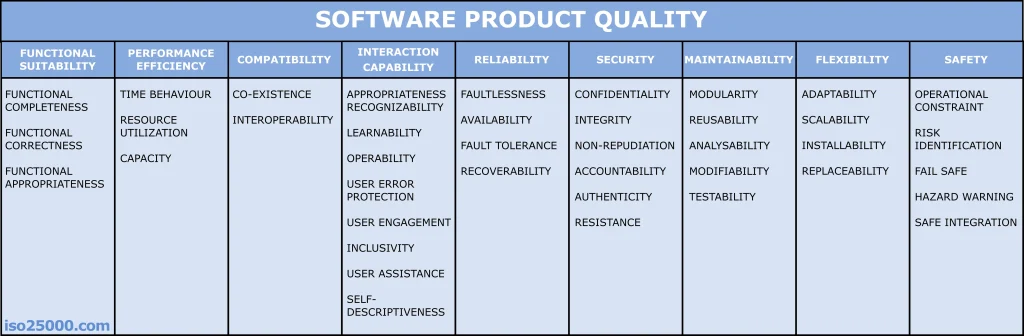
Together, these characteristics form a shared language for quality across technical and business teams. They help you assess how well your software meets user needs, supports business goals, and maintains reliability and safety over time.
Test Early and Test Often
Catching issues is more efficient and less costly in the early stages of the development cycles. So rather than waiting till the development to complete, start testing from the requirements and design phase. This will help you identify bugs and errors before they move into deployment.
Moreover, testing your software frequently enables continuous feedback loops that help you validate every new feature release and update without waiting for a dedicated testing phase. With continuous testing and feedback, you can make sure your users don’t face errors, which in turn reduces the risk of expensive post-release fixes and tarnished brand image.
Use Multiple Testing Methods
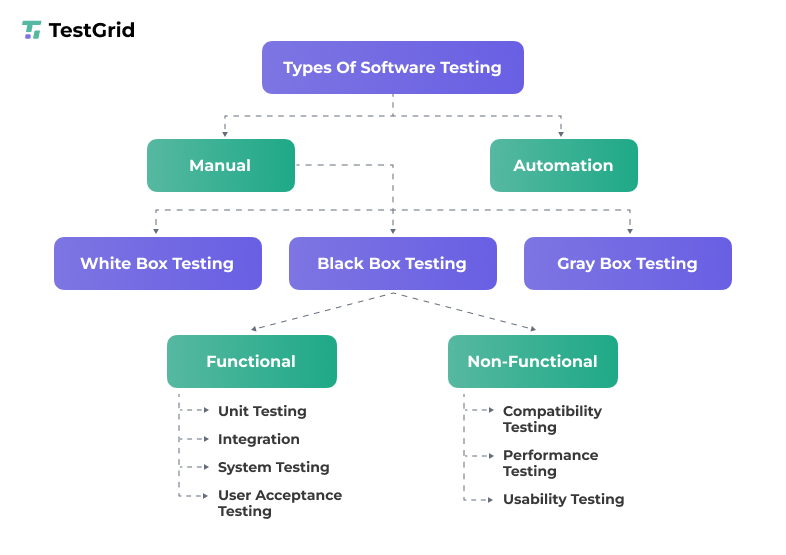
Run different types of testing to ensure no critical issues remain undetected. This means checking every workflow, including functional and non-functional parts by combining unit, integration, system, performance, and security testing.
For instance:
- Unit testing helps you verify that individual components of your software are functioning correctly
- Integration testing checks if the modules, such as payment processing or user authentication work together smoothly
- Performance testing, on the other hand, examines if your software can handle heavy loads and work as intended
A diverse set of testing methods will help you improve defect detection and create a more robust software that delivers on user requirements.
5. Employ efficient process
It’s a given that your dev and QA teams will always be under pressure to release within tight deadlines. This calls for using faster and efficient processes that relieve your team from the constant burden of writing code and testing.
Try to automate software development and testing processes wherever possible to reduce repetitive work such as running regression tests or generating reports to speed up release cycles.
Integrate CI/CD tools into your development and testing workflows to ensure code gets tested immediately after commit and deployed continuously.
Aligning Teams to Deliver Value
Bringing both sides together requires efficient communication and collaboration. The dev and QA teams must talk to sales and marketing and question what areas of your software are most critical to your users.
Business teams must make efforts to understand the technical intricacies like the granular differences between unit and integration testing and how they affect user experience.
Both parties must work together to rank user journeys by business impact, map features to monetizable outcomes, and agree on areas that need highest quality assurance.
The more you practice this over time, the more trust you can build.
And of course, you can use an AI-powered end-to-end testing platform like TestGrid to scale your testing with speed while also maintaining accuracy. Its codeless testing helps you build, run, and analyze tests within minutes, reducing overall testing time, cutting operational costs, and improving ROI.
The platform allows QA teams to execute tests in parallel across multiple devices, browsers, and platforms, which accelerates testing so business teams can launch the product faster. Before your app hits the market, you can perform end-to-end load tests to ensure a top-notch user experience.