CoTester 2.0 is LIVE! Your Always-Available AI Teammate for Testing.
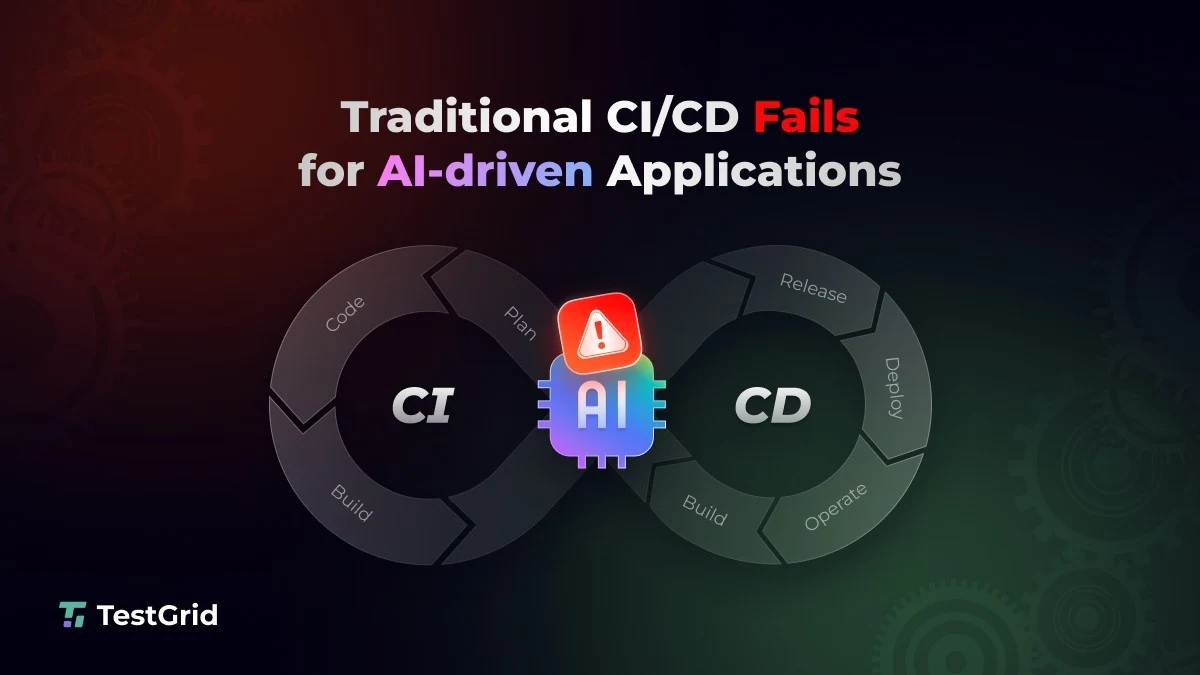
If you run or use SaaS tools, you’ve probably added new features, integrations, or capabilities to make them work with AI or include AI-driven functionality. For a while, it works efficiently – models ship, APIs scale, and dashboards run.
But then the cracks show up. The AI models powering features in your SaaS product, like recommendation engines, fraud detectors, and chatbots, start drafting or slowing down. Data pipelines get messy as new sources and retraining pile up.
Monitoring falls short because traditional dashboards only show uptime, not whether the outputs are still accurate or fair. Over time, these AI-driven features end up creating more complexity than they solve.
The thing is, SaaS tools are designed around deterministic code paths, unlike the probabilistic behavior of Machine Learning (ML) models, even as AI adoption accelerates into production, with 36% of organizations already running Gen AI at limited or full scale and reporting average returns of 1.7x on those investments.
Your existing delivery stack, including pipelines, tools, and workflows, was designed for stability rather than responsiveness.
The infrastructure doesn’t account for constant iteration, user feedback loops, or the uncertainty of AI systems that can produce different outputs from the same inputs. This blog post lays out why the delivery stack needs to change and what an AI-driven approach looks like.
Why SaaS Thinking Fails for AI
1. Models are stateful
Once deployed, AI models inside your SaaS product continue to evolve. They respond to new data, shift under real-world inputs, and degrade in ways you can’t always anticipate. Versioning a model snapshot doesn’t capture what happens when it interacts with live traffic over time.
For example, a model that performs well in staging may skew under subtle differences in production data that only surface after performance drops.
2. Outputs aren’t predictable
AI features won’t always produce the same result with the same input, which makes correctness harder to validate, especially when edge cases don’t trigger alerts. For instance, a chatbot may respond appropriately 95% of the time but generate a critical hallucination under a rare combination of user intent and tone.
3. Data quality is production-critical
In SaaS, code quality drives reliability. In AI, data is the system. Visibility into code changes matters, but so does transparency in integrity, drift, and labeling accuracy of the data feeding the model.
Even a slight shift in upstream categorization or a mislabeled class in a high-volume dataset can change model behavior across thousands of user interactions before anyone notices.
4. Continuous input integration is always operational
User input, corrections, and contextual signals are inputs into the AI system. If your delivery stack can’t collect, filter, and apply that feedback into production, you’re stuck with a static model in a dynamic environment.
Say a fraud model flags a set of transactions incorrectly. If analysts mark them as false positives, but that signal isn’t fed back efficiently into the next training cycle, the model continues making the same mistakes, and trust erodes.
What an AI-Driven Delivery Stack Requires
1. Telemetry for learning systems
Model performance isn’t a single metric. Accuracy might look fine while bias worsens, latency creeps up, or outputs grow less valuable. You need telemetry that breaks down outputs by cohort, tracks hallucinations, flags confidence anomalies, and links results back to inputs.
Suppose a recommendation model starts surfacing irrelevant results for a key demographic. In that case, you should be able to identify the pattern, isolate the source, and act without waiting for user complaints to pile up.
2. ModelOps pipeline created for iteration
That’s what CI/CD is made for: code pushes. Such isn’t the case for model lifecycles. AI delivery requires pipelines that handle training, evaluation, deployment, rollback, and retraining, all with traceability across data, model, and environment.
A robust ModelOps setup, for instance, gives your team confidence to iterate quickly without losing track of what changed or why. You can trace a production behavior anomaly back to the dataset version or hyperparameter used in training, not just the model binary that shipped.
3. Establish data and model lineage as a first-class practice
Testing AI models only after they reach production creates unnecessary risk. You also need to simulate real-world conditions before rollout. What can help is using shadow environments. Replay real data streams and leverage Canary deployments for a small percentage of users, monitoring behavior to catch issues early.
How to Rebuild SaaS Delivery for an AI‑Native World
Now that we’ve seen how and why traditional SaaS assumptions break down when AI features are added, the next step is to change how you structure teams, assign ownership, and manage feedback.
Here’s how you can get going:
1. Reshape teams for adaptive workflows
Conventionally speaking, SaaS teams often follow a sequence where data science builds, engineering ships, and operations support. Right? This sequence works best when code behavior remains constant, but not AI. It needs teams to iterate quickly across boundaries.
| What to do Pair ML engineers with infra and product leads, along with data scientists. Break down silos between model development, data pipelines, and deployment. Form integrated platform teams that own end-to-end delivery, from data ingestion to monitoring in production |
For example, set shared KPIs for ML and infra leads, such as production latency thresholds and retraining velocity. Give both teams joint ownership of the datasets and environments needed to meet those KPIs.
2. Rethink governance and risk ownership
Versioning and uptime checks are enough for many SaaS releases. AI introduces failures that appear gradually through bias, drift, or declining performance. In such a case, governance must upstream, tying itself to real triggers and thresholds.
| What to do Deploy review triggers for retraining, rollback, and manual override decisions. Capture feedback through user corrections, manual cases, and annotated cases. Assign ownership to risk, legal, and engineering teams to link feedback-driven improvements to business metrics as well as technical ones |
For example, create a lightweight internal policy with organizational prompts like, “Who owns this failure type?” or “What’s the escalation path if the risk grows?” In addition, assign a rotating role that prioritizes feedback queues each week and reports on actions taken.
3. Design for model interoperability and user trust from day one
Most SaaS teams focus on shipping features and then retrofitting explainability when users or regulators ask for it. In an AI stack, interoperability goes beyond being a compliance checkbox. It helps teams debug faster and allows users to trust outputs in uncertain systems.
| What to do Integrate explainability frameworks (like feature attribution dashboards or counterfactual examples) into internal tooling so teams can see why a model made a decision. Treat interpretability metrics (e.g., percentage of decisions with traceable rationale) as first‑class alongside latency and accuracy. Expose confidence scores, decision factors, or fallback logic directly in the user experience where appropriate |
Internally, the goal is to trace misfires without having to pull raw training data. An interpretability platform helps with that.
In Conclusion
AI in production won’t behave like SaaS software. And no, this isn’t a temporary challenge that can be patched over. This needs to be treated as an ongoing operating reality, which can happen with delivery practices that support change and learning.
That means building stacks for effective iteration, creating teams that share ownership, and setting up governance that protects. Don’t task yourself with patching systems that were never built to handle the way AI evolves.
CoTester gives you a way to test AI-native behavior without pretending it is deterministic. You generate tests from real requirements, review execution logic before anything runs, and validate outcomes in context rather than relying on pass or fail signals alone.
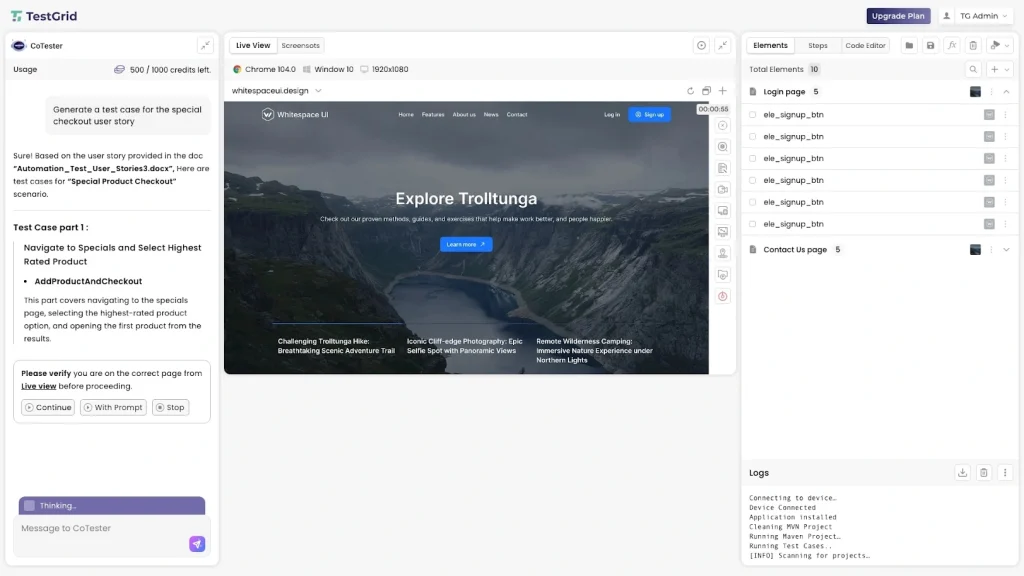
As systems change, CoTester adapts execution while preserving intent. Tests stay aligned with how the system is expected to behave today, not how it behaved when the script was written. Schedule a demo with CoTester to see how it can make a difference to your daily workflow.